

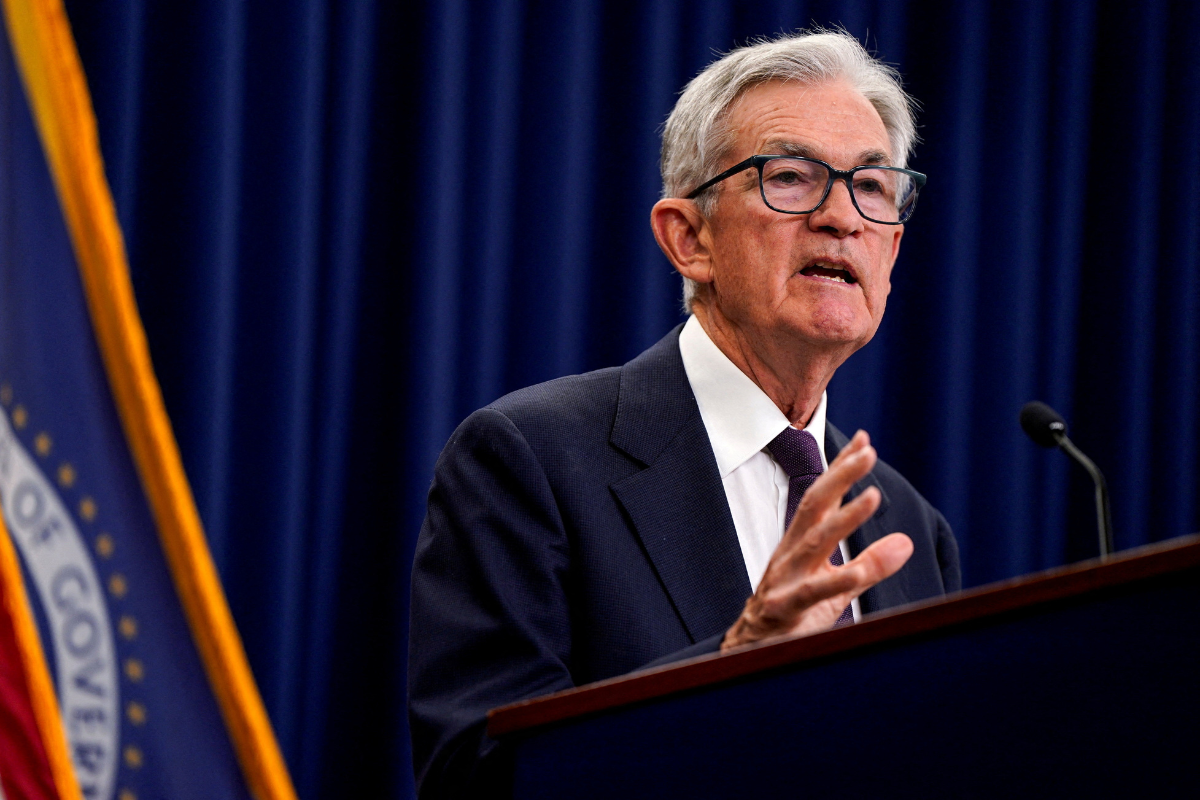
On October 14, 2025, Federal Reserve Chair Jerome Powell delivered a highly anticipated speech at the National Association for Business Economics (NABE) annual meeting in Philadelphia. As markets and economists around the world tuned in, Powell laid out his perspectives on inflation, growth, labor markets, and the future path of monetary policy. Given the ongoing uncertainties—ranging from sticky inflation to labor market softening and delayed data due to the U.S. government shutdown—his remarks were seen as a crucial guidepost for what lies ahead for the U.S. economy.
In this post, we’ll break down Powell’s remarks, analyze the implications, and offer some insight into what the markets and the public should watch going forward.
Basic Information & Context
| Item | Detail |
|---|---|
| Event | NABE Annual Meeting, Philadelphia |
| Date | October 14, 2025 |
| Speaker | Jerome Powell, Chair of the Federal Reserve |
| Major Themes | Inflation control, labor market risks, balance sheet runoff, rate path, liquidity conditions |
| Context | Recent Fed rate cut in September; delayed official economic data due to U.S. federal government shutdown |
| Balance Sheet Status | Fed is engaged in quantitative tightening (QT); Powell flagged that the end of balance sheet runoff may be nearing |
| Labor Market Concern | Hiring slowdown, rising downside risks to employment |
| Inflation & Tariffs | Inflation remains a concern; tariffs contributing to price pressures |
Key Takeaways from Powell’s Speech
1. Balancing Growth, Inflation & Employment
A central thread of Powell’s address was the tension the Fed faces between supporting employment and keeping inflation in check. He noted that, since the September meeting, the overall outlook for inflation and employment hasn’t changed much—but cautioned that “downside risks to employment appear to have risen.” That suggests the Fed is concerned about labor-market softness, even as inflation remains above target.
2. Potential End of Balance Sheet Runoff
Powell flagged that signs are emerging which may indicate the Fed is approaching the end of its quantitative tightening program. He emphasized the importance of maintaining “ample reserves” in the banking system, and noted that liquidity conditions are gradually tightening—seen in firmer repo rates and more visible intraday stresses in money markets.
3. Cautious, Meeting-by-Meeting Approach to Rate Cuts
Rather than offering a bold roadmap, Powell reiterated that future changes to the policy rate would be made on a “meeting-by-meeting” basis, responding to incoming data. He did not rule out another rate cut soon; markets had already priced in high odds of a cut at the October meeting.
4. Reliance on Alternative Data Amid Data Gaps
Because of the government shutdown, official economic releases are delayed. Powell acknowledged this gap and affirmed that Fed officials must rely more heavily on alternative or private-sector data to assess the state of the economy. That said, alternative data cannot fully substitute official metrics, especially when making large policy decisions.
5. Tariffs & Price Pressures
Powell repeatedly pointed to tariffs as a key contributor to elevated inflation and supply chain pressures. He suggested that inflationary pressures remain more concentrated in goods than in broader services sectors, which gives the Fed some latitude—but also warns that if inflation expectations become unanchored, it could complicate policy.
Implications & What to Watch
Markets & Interest Rates
Because Powell signaled a path that could include further rate cuts, if conditions soften, markets may continue to price in monetary easing over the coming months. However, the cautious stance means volatility could remain high, especially if inflation surprises on the upside or jobs data disappoints. Bond yields and equities may be sensitive to every macro release.
Liquidity & Money Markets
If the Fed ceases balance sheet runoff, that could ease liquidity pressure and reduce stress in the short-term funding markets. But tightening liquidity conditions already observed suggest the Fed is walking a fine line—too much tightening could jolt markets, too much accommodation risks inflation.
Labor Market Dynamics
Labor markets appear to be the weak spot Powell is most concerned about. A further slowdown in hiring or rise in unemployment may give the Fed justification to move more aggressively toward rate cuts. If the mix of weak labor and sticky inflation persists, Powell’s task becomes harder.
Policy Messaging & Credibility
Powell’s emphasis on data dependence and meeting-by-meeting decisions helps maintain flexibility. But markets and the public will scrutinize every signal—from tone in his Q&A to adjustments in Fed communication—for hints of hawkish or dovish tilt.
External Risks
Tariff impacts, global spillovers, and any resurgence in inflation due to supply chain disruptions all pose upside risks. Powell’s speech acknowledged these risks, but the Fed’s room to maneuver is limited.
Full Context & Background
To better appreciate the significance of this speech, consider the backdrop: After years of elevated inflation following the pandemic, the Fed embarked on an aggressive rate-hiking cycle. Recently, it cut rates in September by 25 basis points in recognition of weakening labor conditions. But with inflation still above the 2% target, the Fed has faced a dilemma—how to ease without reigniting inflation. The NABE speech offered a fresh signal on how the Fed might navigate this balancing act going forward.
Historical data also show that balance sheet policies can have meaningful spillover into interest rates and liquidity. Powell’s suggestion that the end of runoff may be near sends a signal to markets that the Fed may begin to shift from contractionary to more neutral stances.
In addition, the unusual context of delayed economic data adds opacity to decisions. With the official jobs report missing, the Fed’s reliance on proxies and private forecasts takes on greater importance. That increases the information asymmetry between Powell’s internal deliberations and market expectations.
Final Thoughts
Jerome Powell’s live address at the NABE Conference in Philadelphia was not merely a policy speech—it served as a litmus test for the Fed’s flexibility, resolve, and responsiveness to evolving economic conditions. While he did not commit to bold moves, his cautious tone, openness to ending balance sheet runoff, and emphasis on risks in the labor market offer clear signals: the Fed remains data-dependent, alert to downside risks, and ready to act as needed.
For markets, the next few data releases—especially on employment, inflation, and liquidity—are likely to carry extra weight. Powell’s message underscores that the path ahead is uncertain and contingent, rather than predetermined.
